December 3, 2021
How To Take Notes on Your Opponents in Poker
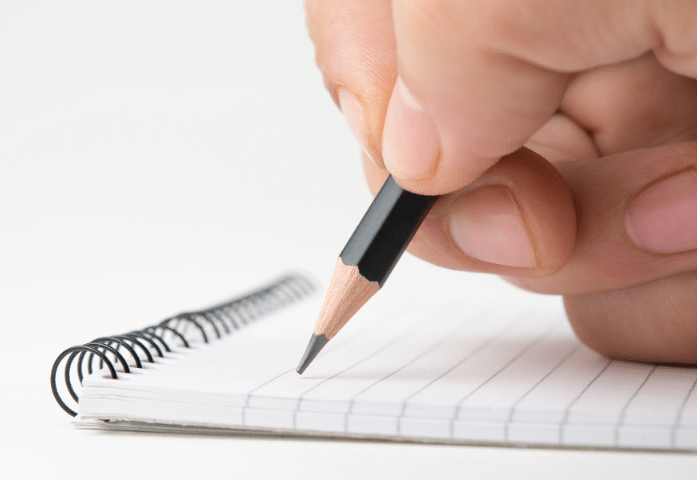
Wondering how to get a better read of your opponents in a poker game? Take notes! Here are some tips on how to do that.
Being an effective and winning poker player takes a lot of time, practice, and study. Yes, study. That means dissecting hands you play, the decisions you make, and the decisions your opponents make. But you don’t have the luxury of recorded footage or instant replay, so how do you get the information you need to study after a game?
You take notes.
Taking notes during a game of poker, whether it be in person at a casino, during an online poker game, or around a home table, can help you better understand the people you play against as well as their play styles and bluffing habits. You can identify aggressive and passive players and better take advantage of their habits and try to outsmart them. You can even learn quite a bit about your own poker game, too. Determine if you’re a more aggressive player than others you face at the table, if your bluffing habits are effective, and more.
Here’s everything you need to know about taking notes on your opponents during a poker game.
What Tools To Use
How you do the physical act of taking notes can depend on your personal preference, poker table etiquette and any relevant rules of the casino, as well as the tools at your disposal. Here are a few ways you can take notes during a poker game:
- Pen and paper: Go the traditional route and bring a notebook and pen (or pencil) to the table. Scribble your notes down quickly but neatly; you want to be able to read your own handwriting between hands and after games.
- Note-taking app: Most smartphones have a note-taking app built in or a slew of note-taking apps you can download onto them. This method replaces the traditional pen and paper and requires you to pull out your phone after a hand to jot down how the hand went down.
- Poker app: Another smartphone tool you can use is a poker app that has a note-taking feature. Apps like Poker Notes Live let you take fast, simple notes with all the information you need. But instead of having to write down your shorthands, you can use the app’s categorization and abbreviation system instead. Some apps let you do a bit of customization for labeling, too.
- Built-in note-taking features online: Many online rooms have note-taking features built in. You can often click on a seat and then the “notes” icon and type from there. However, if you want to come back to your notes on certain hands, it may be best to keep tabs using another one of the methods, too. Make sure to assign usernames to the seat-specific player info you have in case you come across these players again.
What To Look For
Now that you know how you can physically take notes during a poker game, it’s time to talk about what those notes should consist of. A few key pieces of information you should track include:
- Seat position: The first thing you’ll want to do is write down all of the filled seats and leave a little space beside the positions for adding notes. Knowing how someone operates in a specific seat position can better help you understand their overall playing style as well as how experienced they are at the game. For example, an experienced player may be more conservative in the big blind spot but more aggressive in the middle of the table.
- Betting styles: Watch how often people bet, how large their bets are, and the kind of hands they’re betting on before and after the flop as well as after the turn and river. How a player bets in each stage can tell you a lot about their playing style (aggressive or passive), their potential hand, and their experience (their betting compared to the hand they have). For example, you might find players who bet a lot before the flop and then fold after, indicating someone who may have overestimated their hand. Or, you may want to make a note of players who three-bet, or re-raise before the flop.
- Odd events or choices: Definitely take notes on players and hands that stand out. You might want to keep an eye out for all-in hands, consistent bluffing or oddly timed bluffs, and upsets.
- General playing style: After a few hands, you should have a solid idea of how aggressively or passively each player tends to be. Look for how much and how often they bet, how often they fold, when they fold, and the kinds of hands they’ve been riding on (such as pocket pairs or potential straights).
- Tells or habits: In-person poker allows you to identify physical tells that someone is bluffing, intimidated, angry, or unsure (including looking at their cards a lot, fidgeting, sweating, etc.). When you play online, you have to pay attention to betting trends compared to what’s in a player’s pocket cards and on the board to figure out bluffing tells. Either way, pay attention to the information available to you and consider jotting down any signs you see.
Organizing Your Notes
You can organize your notes however you’d like, but here are some methods to consider that may help you make and use your notes more efficiently:
Categorization
Determine what categories of information you want to take down. You can start off simple with their overall play style: good (experienced and skilled), bad (inexperienced or not skilled), and moderate (passive). If there are other categories that help you, such as whether you’ve played with them before, include those, too.
Depending on the note-taking method you’ve chosen, you may be able to set up a template for each player that you can fill in. For example, some players set up a section for each: seat position, betting decision during each stage (pre-flop, flop, river, and turn), and overall tendencies.
Abbreviations
Streamline your note-taking process and simplify the content by using abbreviations for certain categories or pieces of information. Some abbreviations include:
- Card values: A, K, Q, J, etc.
- Card suits: H(earts), S(pades), D(iamonds), C(lubs)
- Seat position: SB (small blind), BB (big blind), UTG (under the gun, left of the BB), MP (middle position), etc.
Symbols
Consider using special symbols to indicate play style, betting style, and other categorizations. This method makes it easy to switch players’ information when you see their style evolve. No matter what symbols you choose, make sure to create a clear key so you never forget what each symbol represents.
Color-Coding
Some people swear by color-coding different categories, thus eliminating the need for abbreviations of major categories. For example, you might assign good players the color green, bad players the color red, moderate players the color orange, and players you’re uncertain of the color blue. Then, you can write your notes in that color, highlight the player’s seat or name that color, or add a box of the corresponding color next to their name/seat.
What Not To Do When Taking Notes in Poker
Here are some final tips on writing and using your poker notes:
Don’t Insult the Other Players
It’s important not to use insults or mockery in your notes. Describing a player based on how you feel about them isn’t information that will help you when you’re trying to jog your memory about their bluffing style. Stick to the categories as mentioned earlier or other specific information based on fact (rather than emotion) for the most helpful notes.
Don’t Categorize Players Too Quickly
It takes a few hands to see patterns in your opponents’ play styles, which means you shouldn’t label a player until after you’ve seen them play a couple hands. Don’t let the information you gain in one hand dictate who that player is. That could lead you to underestimating a player or wrongfully assigning them to a category that influences how you play against them.
Don’t Box Them in Permanently
Players can adapt to a table from hand to hand, meaning your assertion that a player is passive can change in the next hand when they become more aggressive. Be prepared to change labels and categories for players over time until you really nail them down. And, keep in mind that, just because a good regular player makes a few bad calls doesn’t mean they’re bad overall. Give them the benefit of the doubt because re-labeling them as bad could come back to bite you.
Don’t Make It Too Obvious That You’re Taking Notes (or Do Make It Obvious)
This point is more of a personal preference because there are benefits to being discreet about taking notes and to being assertive about taking notes.
Some people prefer to hide that they’re keeping tabs on the table and instead pretend that they’re quickly replying to a text or having a little social media break. That’s because other players may see someone taking notes as a lack of experience, which may make them dismissive of that player. This could be to your benefit, though, if your opponents underestimate you and you pull out a few really strong plays. But once you get a reputation in the scene, that jig is up.
Opponents may also view note taking as a sign of experience or aggression, which may be in your favor or against you, depending on who you’re playing against. Less experienced players or those who scare easily may be intimidated by you and be less willing to go head to head with you. This could be a net positive if you adjust your bluffing and playing styles to take advantage of these players’ weaknesses. There’s also the chance that this aggressive behavior could beget aggressive behavior from others, which could make for big moves that throw you for a loop and even tank your game.
However, if you’re playing a home game, it might be best to keep your note taking a secret so as to not make your buddies mad. Or, at least tell them you’re just practicing your note-taking skills for the next big tourney and you mean no harm.
Don’t Lose Focus
Your focus should be on the hand you’re playing as opposed to reading everyone in the room and furiously writing notes. That means you don’t need to take notes on every single player after every single hand. You have to learn which situations merit a quick note and which ones do not. Consider jotting down a few notes after every two or three hands to make sure you stay in the game. Or, only make notes after a particularly interesting hand in which you learn something new about a player.
Don’t Forget To Study
Before heading into a new match with players you’ve previously played against, read over your notes to remind yourself of who these players are. This preparation can help you start your game strong and focused.
Just as learning to play poker effectively takes time and practice, so does taking stellar poker notes. Over time, you’ll figure out a strategy that allows you to quickly jot down important information and translate it into proactive choices in your game. So get started improving your note-taking strategy with a game of poker at your favorite online New Jersey casino.